
Composting is one of the simplest ways to reduce household waste while giving your garden a nutrient boost, and it’s far less complicated than it sounds.
What You Can Compost
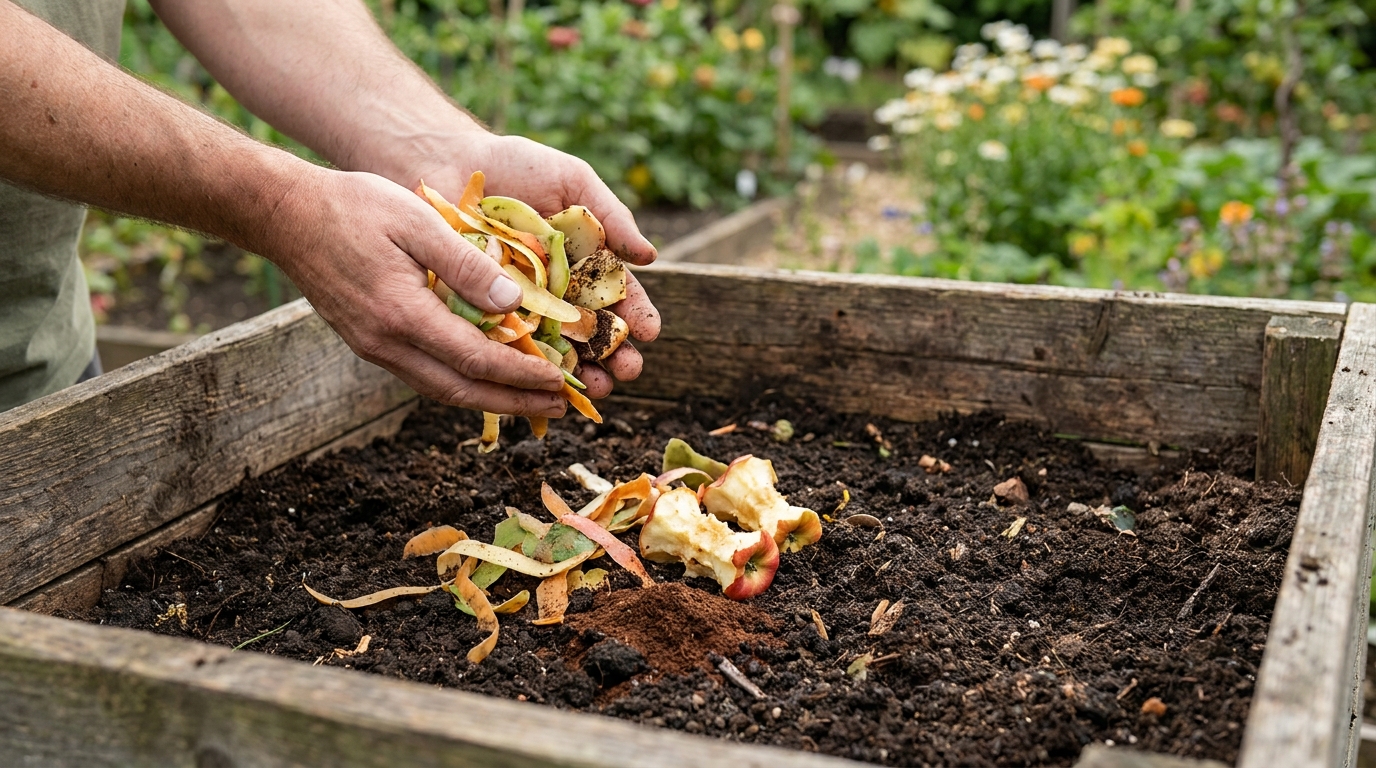
Vegetable peels, fruit scraps, coffee grounds, eggshells, and dry leaves all break down beautifully. Avoid meat, dairy, and oily foods, which attract pests.
Balance Greens and Browns
“Greens” like food scraps provide nitrogen, while “browns” like dry leaves or cardboard provide carbon. A rough balance of the two keeps the pile healthy and odor-free.
Choosing a Compost Bin
You don’t need anything fancy — a simple bin with airflow, or even a covered pit in the corner of your garden, works well for most households.
Turning the Pile
Mixing your compost every week or two adds oxygen and speeds up decomposition, preventing bad smells.
Knowing When It’s Ready
Finished compost looks dark, crumbly, and smells earthy, usually after a few months depending on conditions.
Once ready, mix it into your garden soil and watch your plants respond to the free, nutrient-rich boost.